
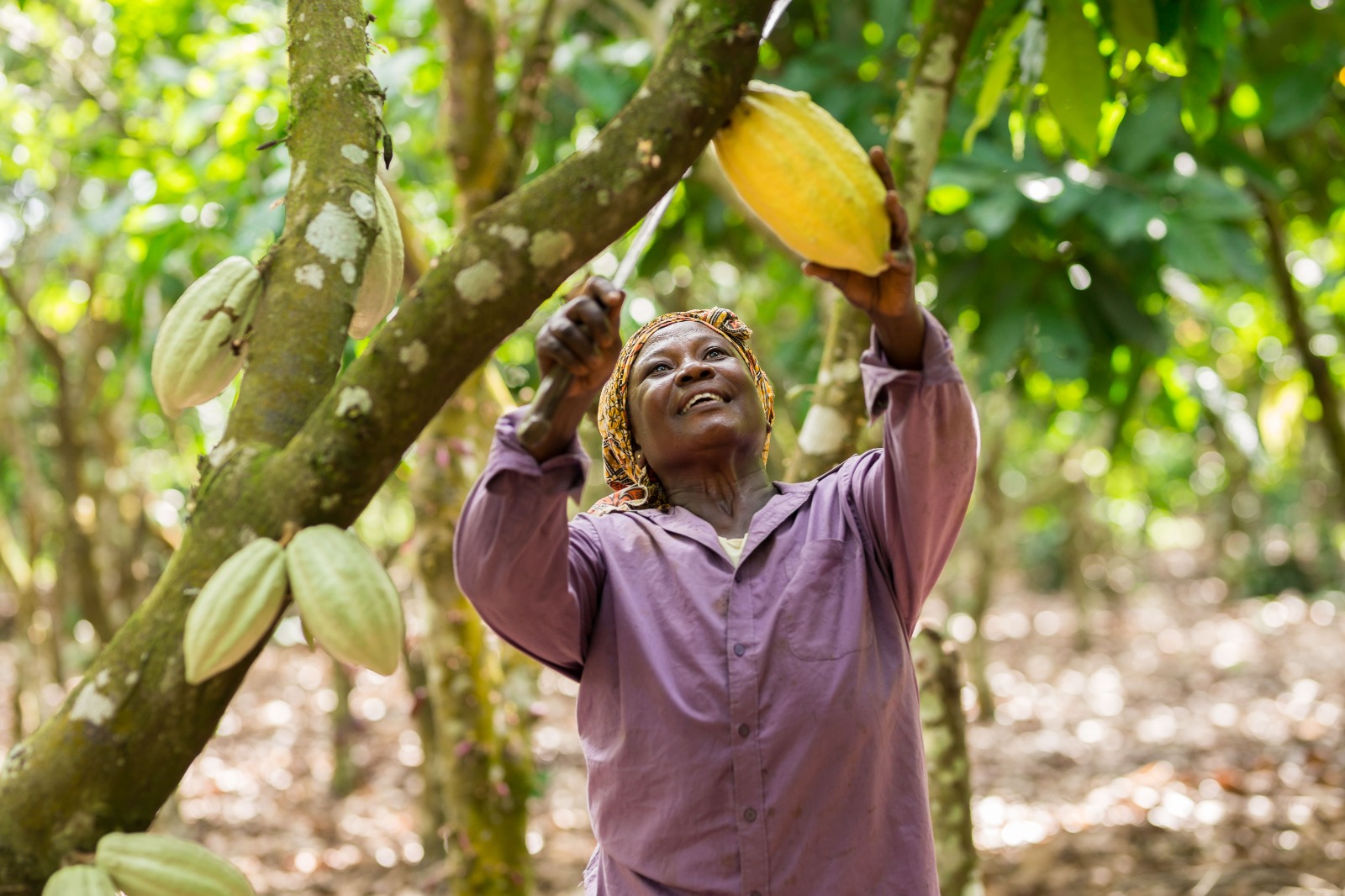

World cocoa prices have fallen sharply since late 2024 yet that fall has not translated into relief for cocoa farmers as the cost of producing cocoa hasn’t dropped with it.
For the many smallholder farmers across West Africa who depend on cocoa for their livelihoods, this decline has deepened existing financial pressures. At the same time, the cost of producing cocoa continues to rise, while the price many farmers receive remains well below the level needed to secure a living income.
On Thursday, 27th August, Fairtrade Africa will convene producer organizations, cocoa buyers, policymakers and partners from across the continent in Accra for Change Day 2026, held alongside its Annual General Assembly. This year’s gathering follows the publication of the new 2026 Fairtrade Living Income Reference Prices for Côte d’Ivoire and Ghana, the two countries that together grow roughly 60 percent of the world’s cocoa.
The reference prices give the industry, for the first time this year, a transparent, evidence-based benchmark for what buyers would need to pay to close the gap between current farm-gate pricing and a living income for the households growing their cocoa.
“For too long, market volatility has made it harder for farmers to plan for a stable, living income. The Fairtrade Living Income Reference Price gives the industry a clear benchmark for closing that gap”. — Paul Colditz, Commercial Director, Fairtrade Africa
Fairtrade Africa is the independent, non-profit umbrella organization representing close to 1.5 million farmers and workers in more than 700 Fairtrade-certified producer organizations across the continent, working through four regional networks spanning West, Southern, Eastern and Central Africa, and the Middle East and North Africa.
Its model rests on three linked mechanisms: the Fairtrade Minimum Price, which acts as a floor regardless of market swings; the Fairtrade Premium, additional funds paid directly to producer organizations to invest as they choose in community projects, business growth, and social improvements; and now the Living Income Reference Price, which gives buyers a concrete figure to price toward rather than a general commitment.
Change Day will also mark the start of a broader business-to-business campaign, running through September, aimed at cocoa buyers, processors, chocolate brands and retailers making the case that sourcing on Fairtrade terms is not only a fairness issue but a supply chain resilience strategy, as an ageing farmer population, climate pressure and tightening due-diligence regulation such as the EU Deforestation Regulation reshape the economics of cocoa sourcing.
The event will bring farmers’ and workers’ voices directly into conversation with the companies that buy their cocoa, an essential exchange, aimed at addressing the gap between pricing decisions and the realities of cocoa production.
Field visits to cocoa-growing communities will take place the day before the main event, on Wednesday, 26th August, offering journalists direct access to farmers and cooperatives ahead of the Accra gathering.