

By : Dr. Timothy Kwakye Karikari
The British football press, widely known for its creative wordplay and pun-heavy match coverage, turned its attention to Ghana after the Black Stars held England to a goalless draw in a tightly contested Group L encounter.
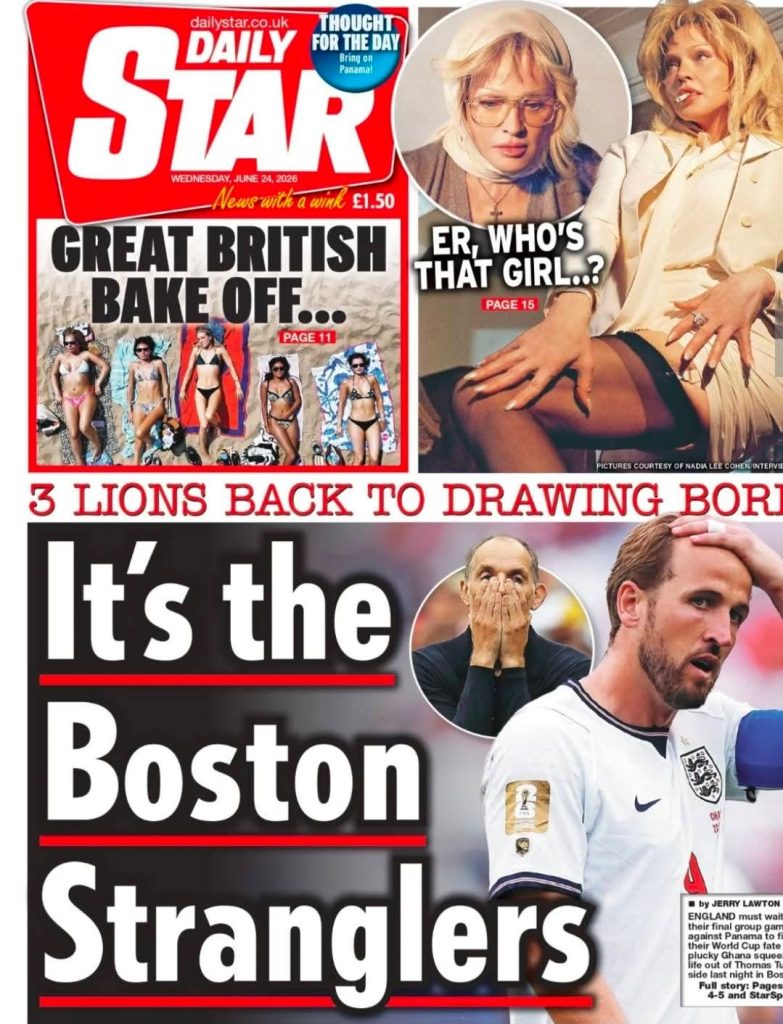
Across UK tabloids, Ghana’s name featured prominently in headline puns that captured England’s frustration in front of goal ; a familiar style in British football journalism, but this time triggered by a disciplined Ghanaian performance rather than English dominance.
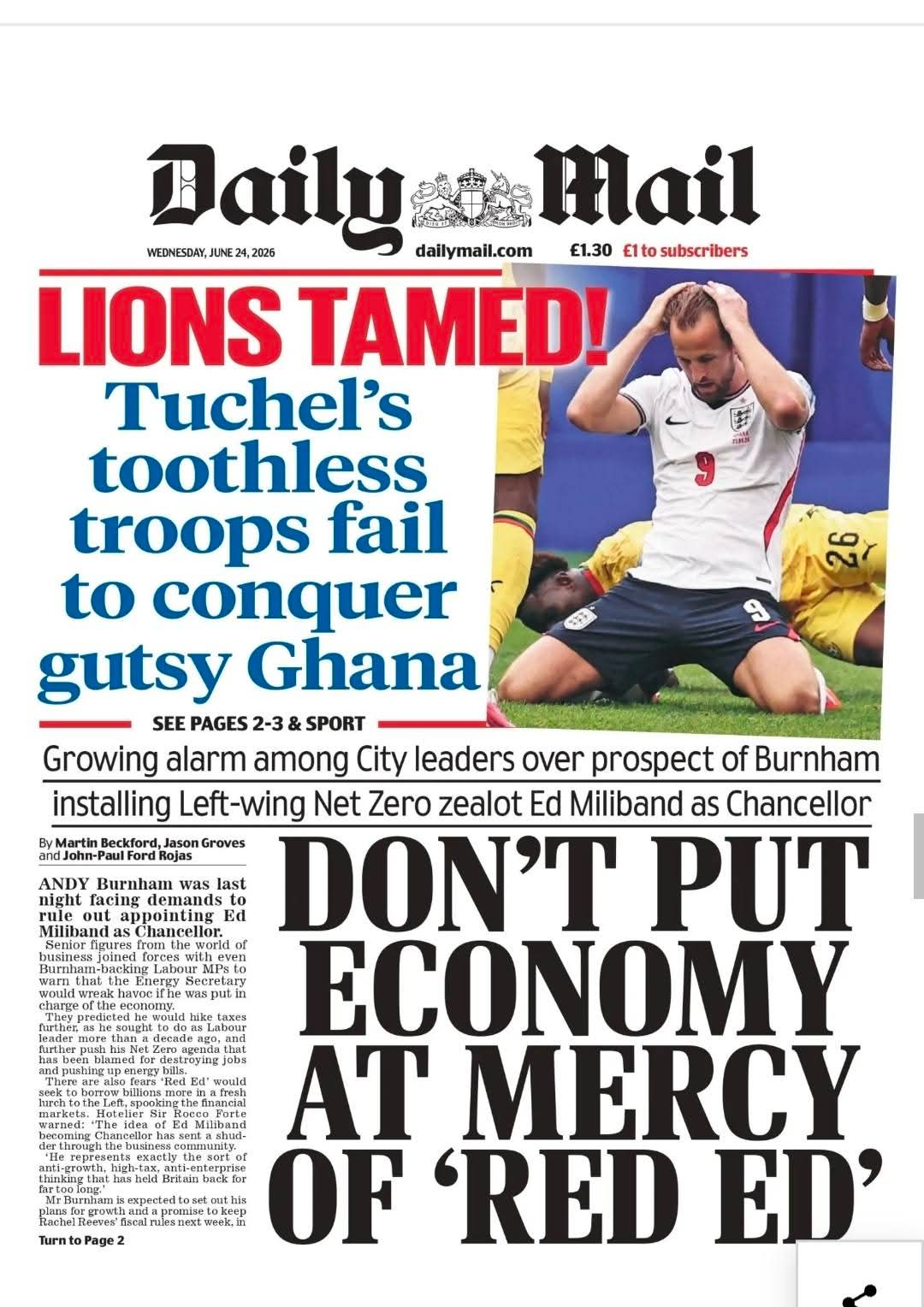
Three headlines stood out in the post-match coverage. The Daily Mail led with: “Tuchel’s toothless troops fail to conquer gusty Ghana”, a sharp reflection on England’s blunt attacking display and Ghana’s organised defensive structure throughout the game.
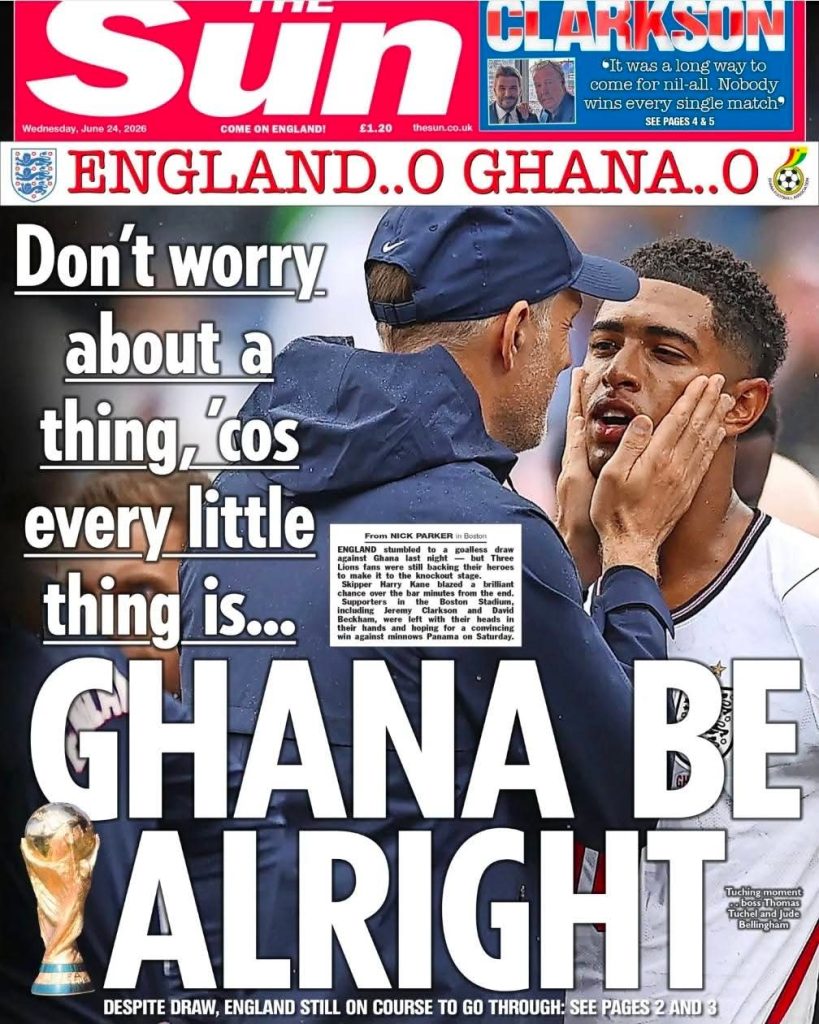
The Sun, known for its playful and culturally driven headline style, wrote: “Don’t worry about a thing… GHANA BE ALRIGHT”, using wordplay to capture England’s lack of cutting edge against a compact Black Stars side.
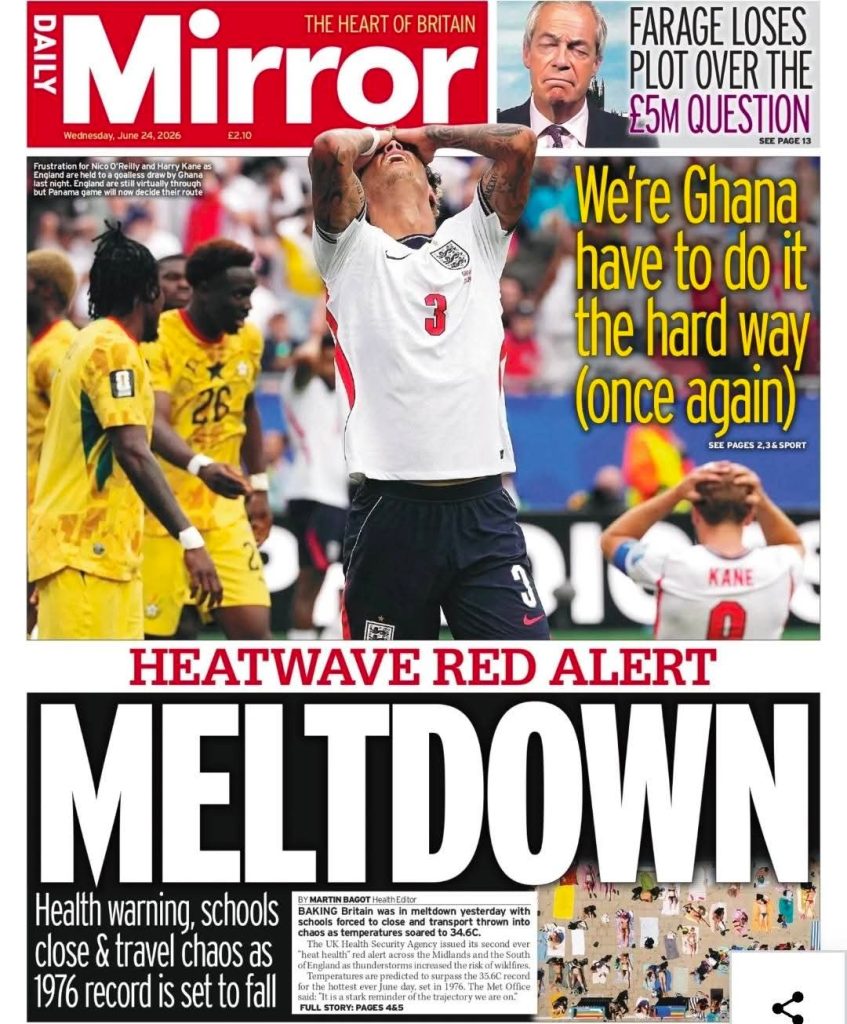
The Daily Mirror followed with: “We’re Ghana have to do it the hard way”, again leaning into Ghana’s name to highlight England’s struggle to convert possession into goals.
However, the match itself carried far more tension than the scoreline suggests, with Ghana feeling particularly aggrieved by several key refereeing decisions.
The match also featured late controversy around officiating decisions, with Ghana denied a clear opportunity in the closing stages when a penalty appeal was not awarded and VAR did not intervene or call for a review. Earlier in the game, there was also a disputed incident just outside the penalty area when the England goalkeeper came off his line and made contact with a Ghana attacker during a challenge, but play was allowed to continue with no foul given and no VAR intervention. The decisions added to Ghana’s frustration on the night, with the head coach later questioning the consistency and responsiveness of VAR during key match moments.
The controversy did not end on the pitch. Ghana head coach, reacting after the game, criticised the decision-making process, remarking that VAR “had gone for coffee” during key moments ; a comment that quickly gained traction in post-match discussions.
Interestingly, even sections of the British press acknowledged the frustration surrounding officiating, adding another layer to a match already defined by Ghana’s defensive discipline and control.
British football media has long been associated with humour, puns and heavy hype around England players and performances. But on this occasion, Ghana disrupted that familiar script.
Coming into the fixture, several British analysts had predicted a comfortable England win, with expectations that Ghana would struggle against the attacking depth and experience of the Three Lions. The build-up largely centred on England’s superiority and a routine result.
Instead, Ghana overturned that narrative completely. The Black Stars delivered a compact, organised and tactically disciplined performance, frustrating England’s attacking rhythm and limiting clear-cut chances throughout the 90 minutes. While England dominated possession in spells, Ghana controlled the structure of the game, shut down key spaces, and showed resilience in key defensive moments.
In Group L, the draw earns Ghana a valuable point as the group remains finely balanced heading into the final round of fixtures.
Ghana now turn their attention to a crucial next test against Croatia, a technically strong side known for midfield control and tournament experience. Another disciplined and focused performance will be required as the Black Stars look to build momentum in their qualification campaign.
For now, though, Ghana’s performance has done more than secure a result, it has shifted expectations, challenged pre-match assumptions, stirred debate around officiating, and dominated the British football headlines in a way few saw coming.