
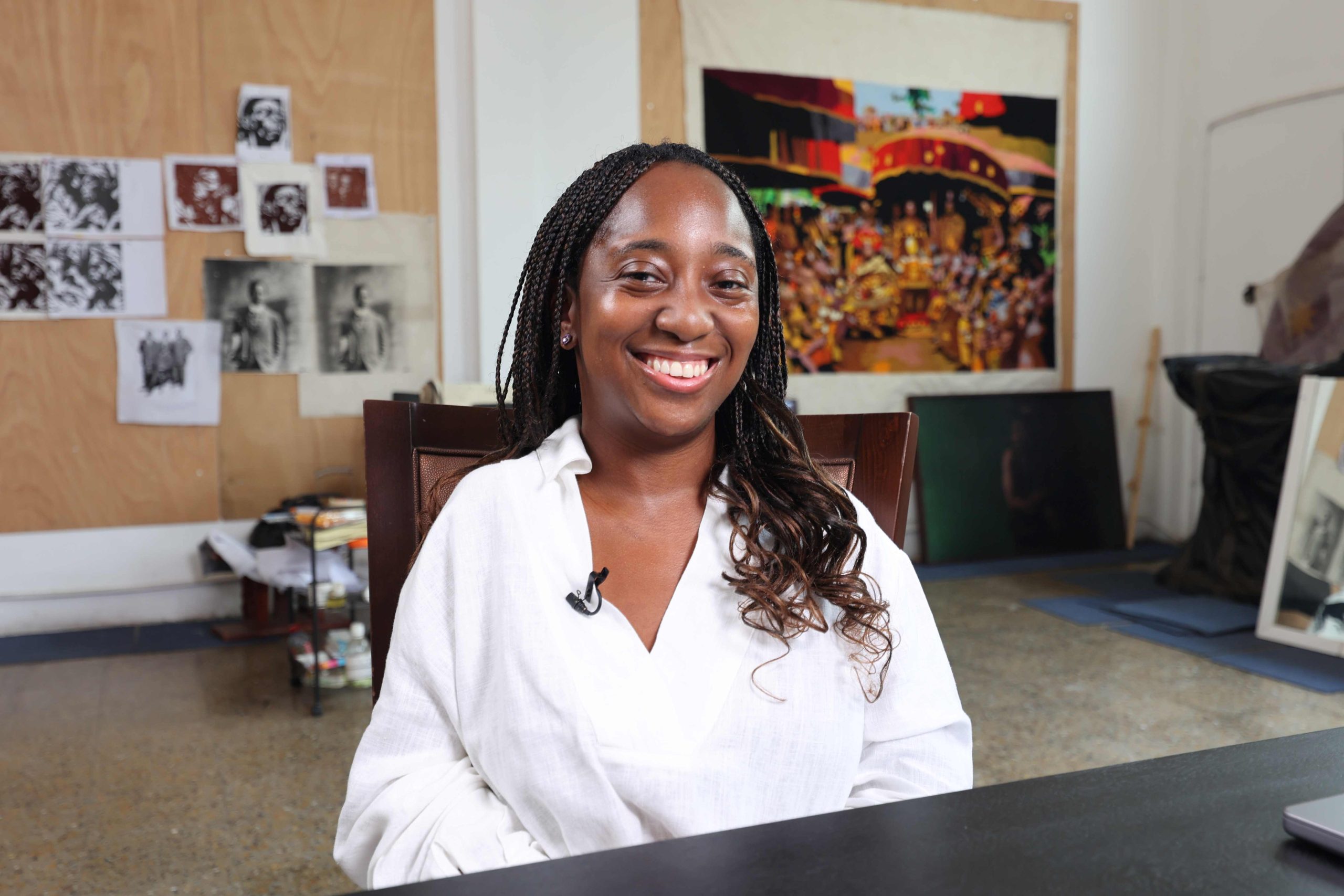

Ghanaian artist Rita Mawuena, founder and director of Si Hene, says her years in the United States shaped her sense of identity and influenced her artistic journey, inspiring her to highlight the significance of Ghana’s history and culture through her work.
Speaking on Franco Vybez with Rev. Erskine, Mawuena explained that growing up among people from different cultural backgrounds influenced how she understood herself and expressed her identity as an artist.
She said reflecting on her experiences in the United States helped her define who she was and determine how she wanted to present herself through her art.
Asked what returning to Ghana to rebuild meant to her and how the experience had shaped her identity as a Ghanaian, Mawuena said coming home had given her a clearer understanding of her roots.
“Now, I’m able to say that I’m a Ghanaian, and this is my art history, and this is where I come from,” she said. “You see that in my work.”
Mawuena said her artistic vision and the message she hopes to communicate to international audiences have evolved over time. She recalled that, initially, she wanted her work to make people feel like kings and queens.
“I mean, generally, at first I would want to say I want people to feel like they are kings and queens,” she said.
She explained that her work on the royal umbrella focused on preserving the legacy of a royal individual. However, with time and experience, her perspective has broadened to encompass the importance of Ghana’s history and cultural heritage.
“But I think now I want people to see Ghana’s history and culture is monumental,” she said.
Reflecting on her childhood visits to museums, Mawuena said Ghanaian art was often displayed at the back, while information about some works was difficult to access because of gaps in historical records, photography and documentation.
She stressed that accessible and comprehensive documentation is essential to helping people understand their origins and cultural heritage.
Through her work, Mawuena hopes to affirm the significance of Ghanaian identity and showcase the country’s rich royal heritage.
She said she pays particular attention to the scale, cost and intricate details of her pieces. She also emphasised the importance of documenting their histories, ensuring viewers can access information such as dates and the names of the people who made them. “You won’t see ‘date unknown’ or ‘maker unknown’,” she said. “You will see the information.”
By: Mary Anna Cofie