
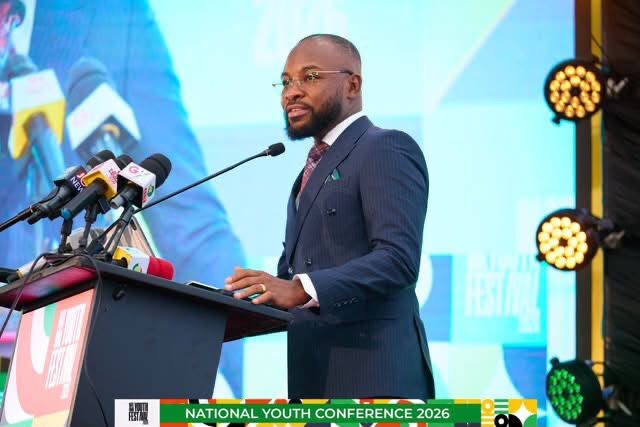

The 2026 National Youth Conference has officially opened at the Kwame Nkrumah University of Science and Technology (KNUST) in Kumasi, bringing together young people, policymakers and other stakeholders for three days of discussions on the future of Ghana’s youth.
The conference, which began on Tuesday, August 11, 2026, is being held as part of activities marking International Youth Day and is anchored on Ghana’s national theme, “Rebuilding Values, Inspiring Patriotism: Empowering the Youth in the Digital Age.” The global theme for this year’s celebration is “Different Contexts, Common Aspirations.”
The theme places emphasis on the need to rebuild positive values among young people while equipping them with the skills and opportunities required to navigate an increasingly digital world. It also seeks to encourage young people to become responsible, innovative and active contributors to national development.
Opening the conference, Chief Executive Officer of the National Youth Authority (NYA), Osman Abdulai Ayariga, challenged young people to take a more active role in shaping Ghana’s future.
He urged the youth to move beyond being passive recipients of government interventions and recognise their capacity to influence national development through their ideas, skills, leadership and civic participation.
Ayariga Esq. also encouraged young people to contribute to building the nation. “Don’t only complain, but contribute, don’t only wait for opportunity, prepare for it. So that when it comes, you are actually ready to embrace it. It makes you have empowerment beyond speeches.”
Beyond opportunities, the NYA CEO highlighted the importance of character and patriotism in the development of the country. He noted that Ghanaian youth need the creativity, energy and skills needed to drive national development, but these qualities must be supported by discipline, integrity and responsible citizenship. “At the National Youth Authority, we know empowerment has to go beyond motivational speeches. Young people need skills, opportunities, mentorship, access to information and platforms where their ideas are actually heard by institutions willing to listen and respond. Our mandate includes building yourng people’s capacity to participate in nation building,”
The three-day conference held from August 10 – 12 2026, is expected to provide a platform for young people to engage in conversations around issues affecting their lives, explore opportunities available to them and contribute ideas towards national development.
The conference has also provided an opportunity for government to respond to some immediate concerns affecting young people. Speaking at the opening, Minister for Youth Development and Empowerment George Opare-Addo Esq. said government will engage relevant authorities over concerns about the rising cost of student accommodation at KNUST.
He announced plans to petition the Ministry of Education and other appropriate authorities while engaging private hostel operators to ensure accommodation charges are reasonable for students. He also disclosed that discussions were ongoing with private investors over the construction of additional affordable accommodation facilities on university campuses.
The National Youth Conference forms part of broader efforts by the Ministry of Youth Development and Empowerment and the National Youth Authority to create platforms where young people can discuss their challenges, build networks and contribute directly to conversations about Ghana’s development.
The Ministry of Youth Development and Empowerment is commemorating International Youth Day 2026 under Ghana’s national theme, “Rebuilding Values, Inspiring Patriotism: Empowering the Youth in the Digital Age.” The theme complements the global theme, “Different Contexts, Common Aspirations,” and seeks to highlight the shared aspirations of young people across different backgrounds. The Ministry says the commemoration will focus on rebuilding positive values, strengthening patriotism and equipping young people with digital skills and opportunities to thrive. It also calls for stronger collaboration among government, the private sector, development partners, civil society and educational institutions to create an enabling environment for young people