

TCL, the world’s largest Mini LED television brand, is encouraging consumers across West Africa to look beyond the “Mini LED” label when shopping for a television and pay closer attention to three features that can significantly influence picture quality.
The call comes as the company strengthens its position in the global television market. According to Omdia’s global Mini LED TV shipment data for the first half of 2026, TCL ranked No. 1 worldwide by shipment volume, recording 2.43 million units. This represents a 77.1 per cent increase compared with the same period last year.
As Mini LED technology gains popularity, however, the market is becoming increasingly crowded. The label now appears on television models across different price points, from premium flagship sets to more affordable options. Yet two televisions carrying the same label can deliver noticeably different viewing experiences.
For consumers, this raises an important question: what exactly are they paying for?
Mini LED uses LED chips approximately one-fifth the size of those found in conventional LCD television backlights. Their smaller size allows manufacturers to fit more LEDs behind a screen, creating a denser backlight system.
These LEDs can be grouped into independently controlled zones, allowing different sections of the screen to become brighter or darker depending on the images being displayed. This can produce deeper blacks, brighter highlights and clearer details in scenes where light and darkness appear together.
However, the Mini LED label alone does not indicate how many LEDs a television uses, how they are arranged or how effectively their brightness is controlled. These differences can have a significant impact on picture quality.
TCL is therefore encouraging buyers to look beyond the label and consider three key features: dimming technology, the number of dimming zones and backlight architecture.
“Mini LED gets talked about as if it’s a single technology, but it’s really a family of approaches with very different results,” said Mr. Daniel Ray, Director of Sales / General Manager of West Africa, TCL Middle East, Africa & Beyond.
“The three things that actually decide the outcome — hardware versus software dimming, zone count, and backlight architecture — are things any shopper can ask about, for any brand, before they buy.”
Understanding the Three Things That Matter
Hardware versus software dimming
Hardware local dimming physically adjusts the brightness of different LED clusters behind the screen, allowing specific areas to be brightened or dimmed independently. This gives the television greater control over how light and dark scenes appear. Software-based, or virtual dimming, relies more heavily on image processing rather than independently controlling physical backlight zones. This can result in less precise control of bright and dark areas, potentially affecting contrast and creating unwanted light around bright objects against dark backgrounds.
The number of dimming zones
Dimming zones determine how precisely a television can control different areas of its backlight. Generally, the more independently controlled zones a television has, the better it can distinguish between bright and dark sections of an image. Even a few hundred zones can improve on conventional LCD backlighting. Under comparable conditions, televisions with several thousand zones can offer more precise light control, helping to improve contrast and preserve detail in challenging scenes.
Backlight architecture
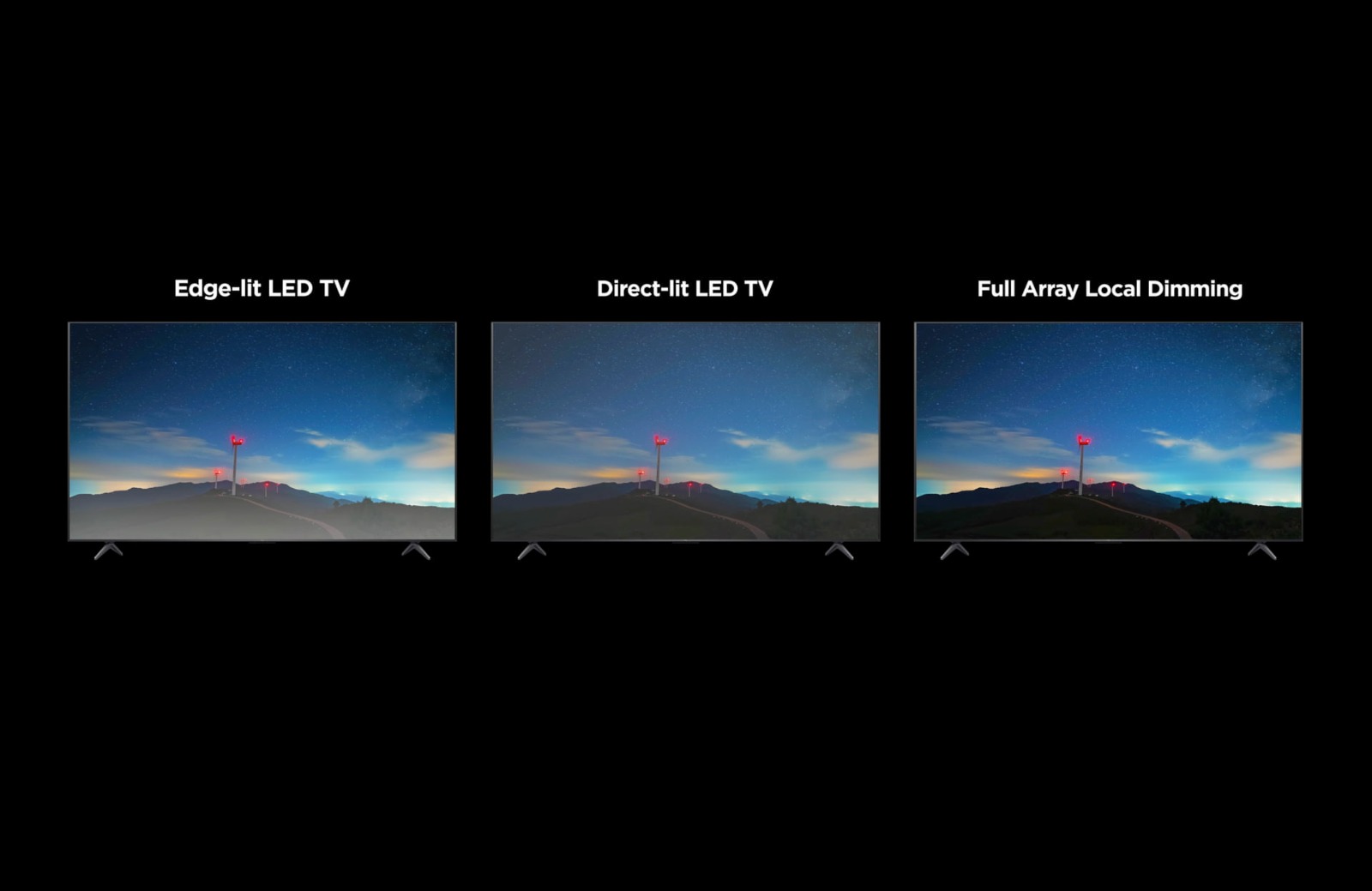
The way LEDs are positioned and controlled also matters. Edge-lit televisions have LEDs positioned around the edges of the screen. While this supports slimmer designs, it generally offers less precise localised backlight control. Direct-lit televisions position LEDs behind the screen, although the backlight may be controlled as a single unit rather than through independently managed zones. Full Array Local Dimming (FALD) takes this further by distributing LEDs across the back of the screen and allowing different sections to be controlled independently. This provides more precise brightness and contrast control and forms the foundation of TCL’s Mini LED backlight approach.
TCL’s Approach to Mini LED Technology
For TCL, these technical differences are central to its Mini LED television range. The company has incorporated Full Array Local Dimming across its Mini LED range, from entry-level models to flagship offerings. This approach gives consumers across different price categories access to the technology while allowing them to compare televisions based on their actual specifications and performance.
As Mini LED technology continues to gain traction, more television models are likely to carry the label. For buyers, understanding what sits behind the screen will therefore become just as important as the name printed on the box.
Before making a purchase, consumers are encouraged to ask about the dimming technology, the number of dimming zones and the backlight architecture. These details offer a clearer indication of what a television can deliver.
With its strong global shipment performance and continued investment in Mini LED technology, TCL is positioning itself around both innovation and accessibility while encouraging consumers to make more informed purchasing decisions.
For more information, visit: https://www.tcl.com/westafrica/en
About TCL
TCL is a leading consumer electronics brand and a leader in the global television industry, operating in more than 160 markets worldwide. The company specialises in the research, development, and manufacturing of consumer electronics products, including televisions, audio products, home appliances, mobile devices, smart glasses, and commercial displays.
Visit the TCL website at https://www.tcl.com.