
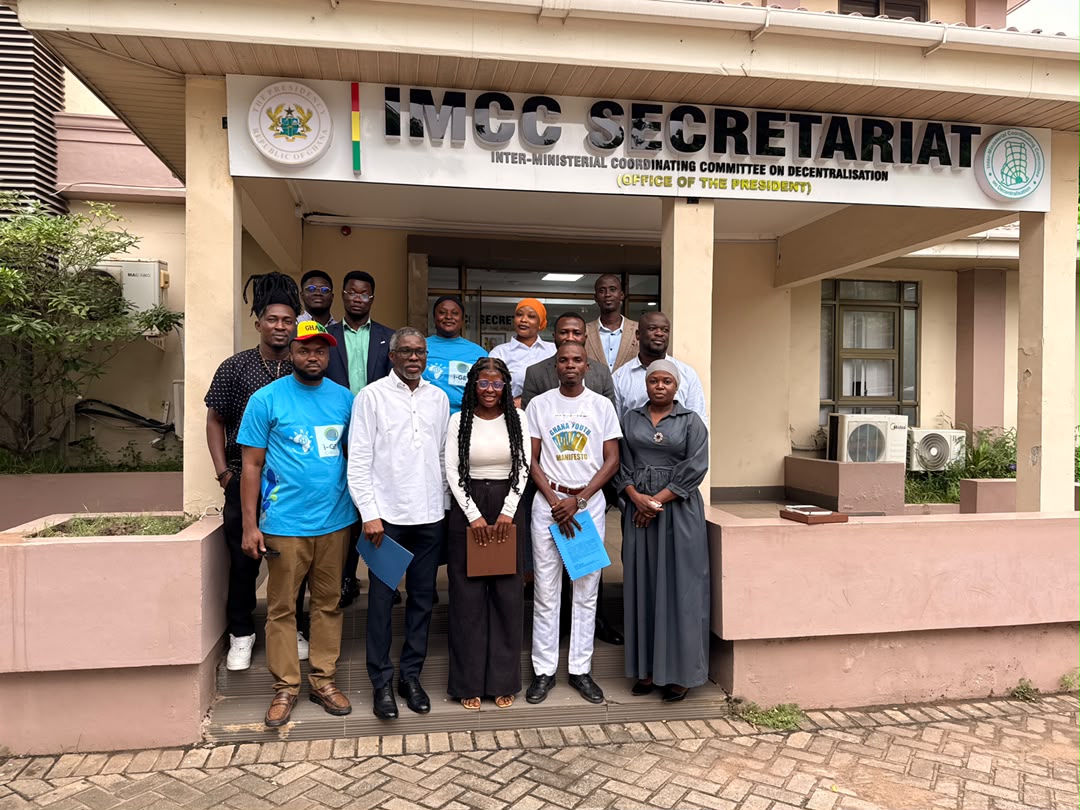
National Coordinator of the Ghana Youth Manifesto Coalition (GYMC), Christopher Wisdom Penu, has urged the Inter-Ministerial Coordinating Committee on Decentralization (IMCC) to take youth perspectives seriously in Ghana’s decentralization reforms, saying “young people constitute over 73% of Ghana’s demographic, and the modalities of local governance directly impact youth employment, grassroots political participation, and socio‑economic development.”

In a recent engagement with the Inter‑Ministerial Coordinating Committee on Decentralization (IMCCD), organized under the Strengthening Accountable and Inclusive Development (SAID) Ghana Project by NORSAAC with support from Oxfam, the Ghana Youth Coalition presented its recommendations on constitutional reforms and the electoral framework for Metropolitan, Municipal, and District Chief Executives (MMDCEs).
The coalition commended Cabinet’s approval of the amendment bill that will enable the direct election of MMDCEs, describing it as “a progressive step toward deepening local governance and strengthening Ghana’s decentralized democratic architecture.”
Speaking at the meeting, representatives emphasized that reforms must align with the Constitution Review Committee (CRC) Report, which advocates for participatory democracy and the establishment of an Independent Devolution Commission. “This legislative push aligns perfectly with the CRC’s proposals on local governance,” Penu noted, adding that collaboration with ministries is vital to ensure transparency and inclusion.
He highlighted the importance of youth voices in shaping policy. “We strongly believe that sustainable development and effective governance can only be achieved when young people are recognized not merely as beneficiaries of development but as active citizens and partners.”
The coalition further urged ministries to prioritize civic education and public sensitization ahead of the bill’s rollout. “Our actions have led to a lot of threats, from littered beaches to flooding. To save our beautiful nation, we all have a lot to do,” one youth representative stressed, linking governance reforms to broader national accountability.
The transition to elected MMDCEs holds the promise of a more responsive and capable local government. However, the architecture of the impending bill will determine whether this reform empowers the grassroots or merely decentralizes elite capture. Christopher Wisdom Penu said, “The architecture of this reform will decide if it strengthens grassroots democracy or simply decentralizes elite capture. That is why we stand ready to mobilize young people nationwide to support a bill that embeds transparency, inclusivity, and direct accountability into our local assemblies.”